

This article is for general information only and is not medical advice. Talk to your doctor about your own health.
In short: A new analysis led by researchers at the University of Southern California (USC) Keck School of Medicine found that people infected with herpes simplex virus type 1 (HSV-1), the virus best known for causing cold sores, had 48% higher odds of developing dementia or Alzheimer's disease. The study shows a link, not proof that the virus causes dementia.
What the study did
- Type of study: a systematic review and meta-analysis, which pools the results of earlier studies.
- Size: 11 studies covering 56,292 people, with an average age of 66.
- Published in: the journal Open Forum Infectious Diseases, in November 2026.
- Authors include: Forest Lin and Jeffrey D. Klausner, a clinical professor at USC.
What it found
- HSV-1 infection was linked to 1.48 times the odds of dementia or Alzheimer's disease.
- Looking at Alzheimer's alone, the odds were about 44% higher.
Why this matters: HSV-1 is extremely common
The World Health Organization estimates that around two-thirds of people under 50 worldwide carry HSV-1. Most people catch it in childhood, and many never have symptoms. After infection, the virus stays in the nerves for life and can reactivate from time to time.
Researchers think the virus may reach the brain and, when it reactivates, trigger inflammation and immune responses that could contribute to the brain changes seen in Alzheimer's. This idea has been studied for years, and the new analysis adds to the evidence.
Putting the risk in perspective
Klausner gave rough estimates of lifetime Alzheimer's risk from age 45:
- Average risk overall: about 10% for men and 20% for women.
- Without HSV-1: roughly 5–10% for men and 10–20% for women.
- With HSV-1: roughly 10–15% for men and 20–25% for women.
In other words, most people with the virus will not develop Alzheimer's.
What the study doesn't prove
- It shows an association, not cause and effect.
- Many of the studies looked back at past records, and they measured infection and dementia in different ways.
- Results varied a lot between studies.
The authors say long-term studies that follow people forward in time, and trials that test treatments, are needed to find out whether HSV-1 actually causes dementia.
Could antivirals or vaccines help?
Not proven yet. An outside expert pointed to earlier research in which older adults who received the recombinant shingles vaccine had a lower dementia risk, which supports the wider idea that some viruses may play a role. But large randomised trials are still needed. Klausner said a vaccine or cure for HSV-1 would be needed to test the idea properly, and that this research remains underfunded.
What you can do now
Experts generally agree that many dementia cases are linked to factors people can influence, such as high blood pressure, diabetes, smoking, physical inactivity, hearing loss and social isolation. Looking after your heart health, staying active and protecting your hearing are sensible steps for everyone. If you are worried about memory changes, or have frequent cold sores, talk to a doctor.
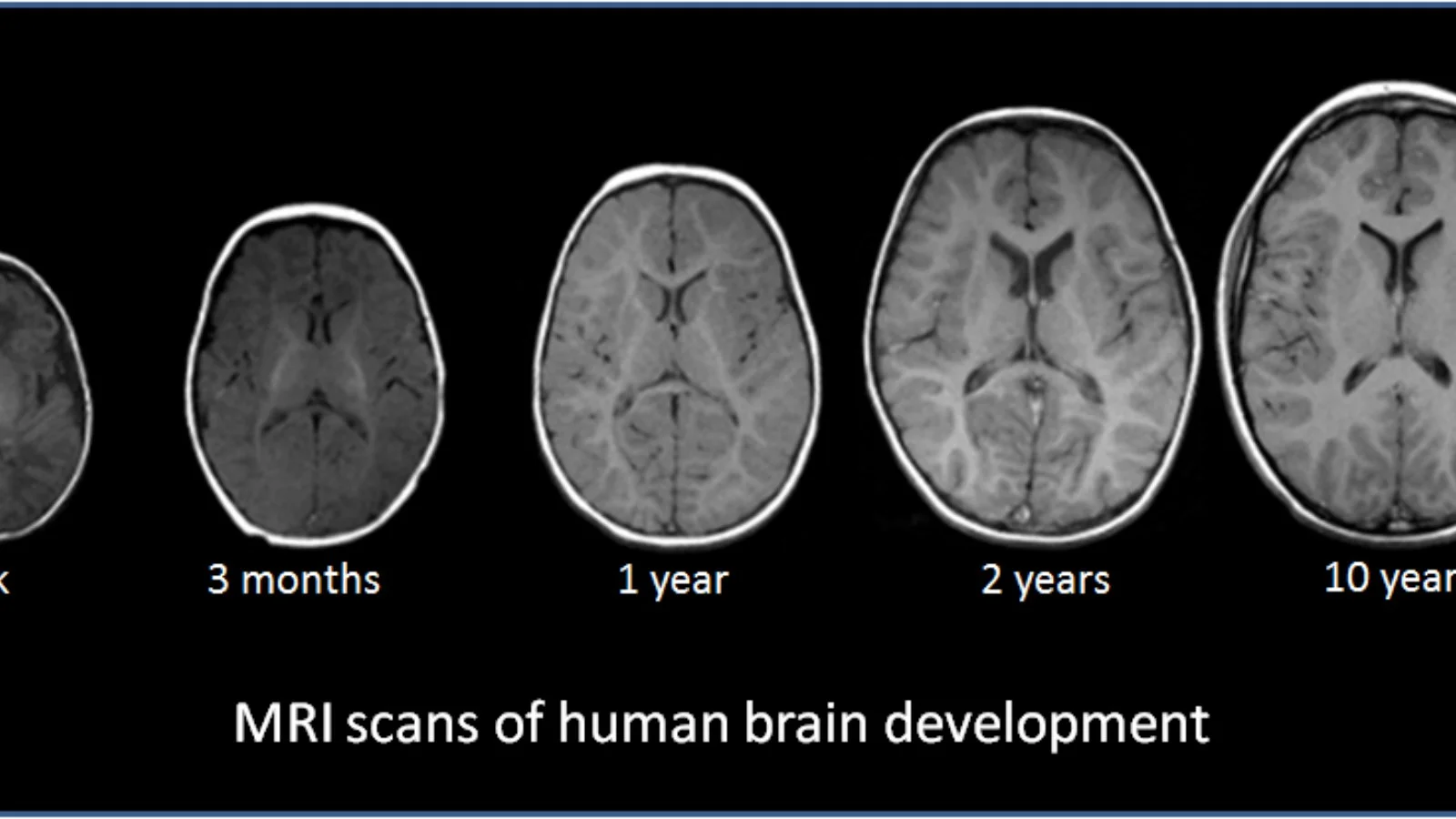
Featured image: "Human brain development 1wk-3mo-1yr-2yr-10yr-T1W-MRI" by National Institutes of Health, Public domain (cropped), via Wikimedia Commons. Sources: Newsweek (23 November 2026), Open Forum Infectious Diseases (Lin et al., 2026) and the World Health Organization.















Comments 0
Leave a Comment
💬
No comments yet. Be the first to share your thoughts!