

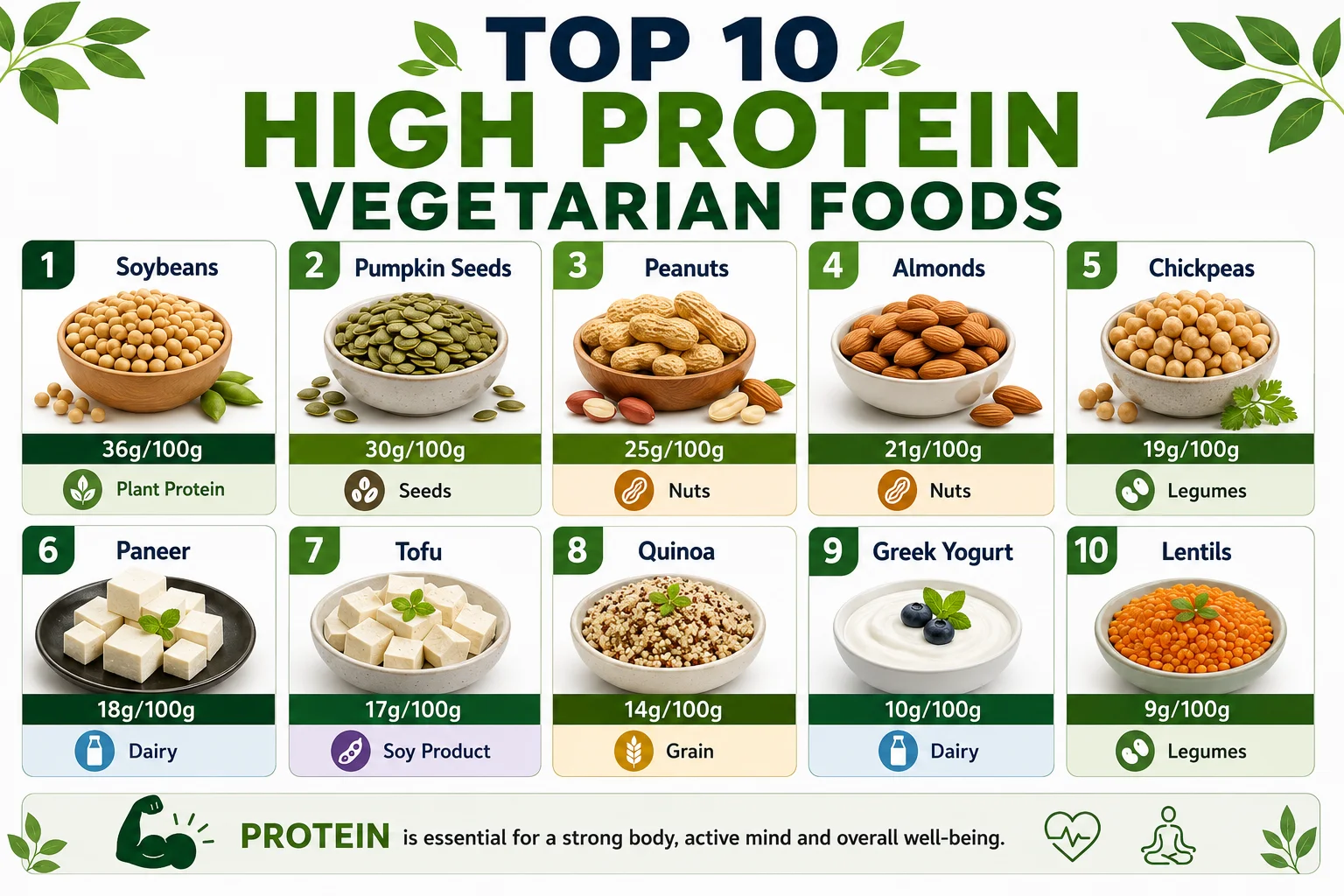
Protein is an essential nutrient required for muscle repair, hormone production, immune support, and overall health. Many people think protein mainly comes from meat, but there are plenty of powerful vegetarian protein sources available.
A well-planned vegetarian diet can provide enough protein through foods like lentils, soy products, dairy, nuts, and seeds.
Here are the top 10 high-protein vegetarian foods that can help you meet your daily protein needs.
1. Soybeans
? Protein: Around 36g per 100g (dry)
Soybeans are one of the richest plant-based protein sources and contain all nine essential amino acids.
Benefits:
- Complete vegetarian protein
- Supports muscle growth
- Rich in iron and calcium
- Helps maintain heart health
Best ways to eat: Soy chunks, tofu, soy milk, soybean curry
2. Lentils (Dal)
? Protein: Around 9g per 100g (cooked)
Lentils are a staple vegetarian protein source, especially in South Asian diets.
Benefits:
- High in protein and fiber
- Improves digestion
- Helps control blood sugar
- Affordable and easy to prepare
Best ways to eat: Dal soup, lentil curry, salads
3. Paneer (Cottage Cheese)
? Protein: Around 18g per 100g
Paneer is a popular dairy-based protein food that is excellent for muscle building.
Benefits:
- Rich in calcium
- Supports bone health
- Provides slow-digesting protein
- Keeps you full longer
Best ways to eat: Paneer curry, grilled paneer, salads
4. Tofu
?? Protein: Around 17g per 100g
Tofu is made from soybeans and is a great alternative to paneer for vegans.
Benefits:
- Complete plant protein
- Low in calories
- Supports muscle recovery
- Contains essential minerals
Best ways to eat: Stir fry, tofu curry, sandwiches
5. Chickpeas (Chana)
? Protein: Around 19g per 100g (dry)
Chickpeas are nutrient-rich legumes packed with protein and fiber.
Benefits:
- Supports weight management
- Improves digestion
- Provides long-lasting energy
- Rich in minerals
Best ways to eat: Chana curry, hummus, roasted chickpeas
6. Peanuts
? Protein: Around 25–26g per 100g
Peanuts are an inexpensive and tasty protein-rich snack.
Benefits:
- High in healthy fats
- Supports muscle growth
- Provides energy
- Rich in magnesium
Best ways to eat: Peanut butter, roasted peanuts, smoothies
7. Greek Yogurt / Curd
? Protein: Around 10g per 100g
Greek yogurt contains more protein than regular yogurt and also provides beneficial probiotics.
Benefits:
- Improves gut health
- Supports digestion
- Rich in calcium
- Helps muscle recovery
Best ways to eat: Breakfast bowls, smoothies, snacks
8. Quinoa
? Protein: Around 14g per 100g (dry)
Quinoa is a plant-based complete protein containing all essential amino acids.
Benefits:
- Gluten-free
- High in fiber
- Provides slow energy
- Supports healthy weight
Best ways to eat: Salads, bowls, cooked meals
9. Pumpkin Seeds
? Protein: Around 30g per 100g
Pumpkin seeds are small but extremely nutrient-dense.
Benefits:
- High protein content
- Rich in zinc and magnesium
- Supports immunity
- Good for heart health
Best ways to eat: Add to oatmeal, salads, smoothies
10. Almonds
? Protein: Around 21g per 100g
Almonds are a nutritious snack containing protein, healthy fats, and antioxidants.
Benefits:
- Supports brain health
- Improves heart health
- Provides vitamin E
- Helps control hunger
Best ways to eat: Morning snack, smoothies, nut mixes
High Protein Vegetarian Foods Comparison Table
| Food | Protein (Approx.) | Category |
|---|---|---|
| Soybeans | 36g/100g | Plant Protein |
| Pumpkin Seeds | 30g/100g | Seeds |
| Peanuts | 25g/100g | Nuts |
| Almonds | 21g/100g | Nuts |
| Chickpeas | 19g/100g | Legumes |
| Paneer | 18g/100g | Dairy |
| Tofu | 17g/100g | Soy Product |
| Quinoa | 14g/100g | Grain |
| Greek Yogurt | 10g/100g | Dairy |
| Lentils | 9g/100g | Legumes |
Benefits of a High-Protein Vegetarian Diet
A protein-rich vegetarian diet can help:
? Build and repair muscles
? Support healthy weight loss
? Improve metabolism
? Increase energy levels
? Strengthen bones
? Improve immunity
? Keep you full for longer



















Comments 0
Leave a Comment
💬
No comments yet. Be the first to share your thoughts!