

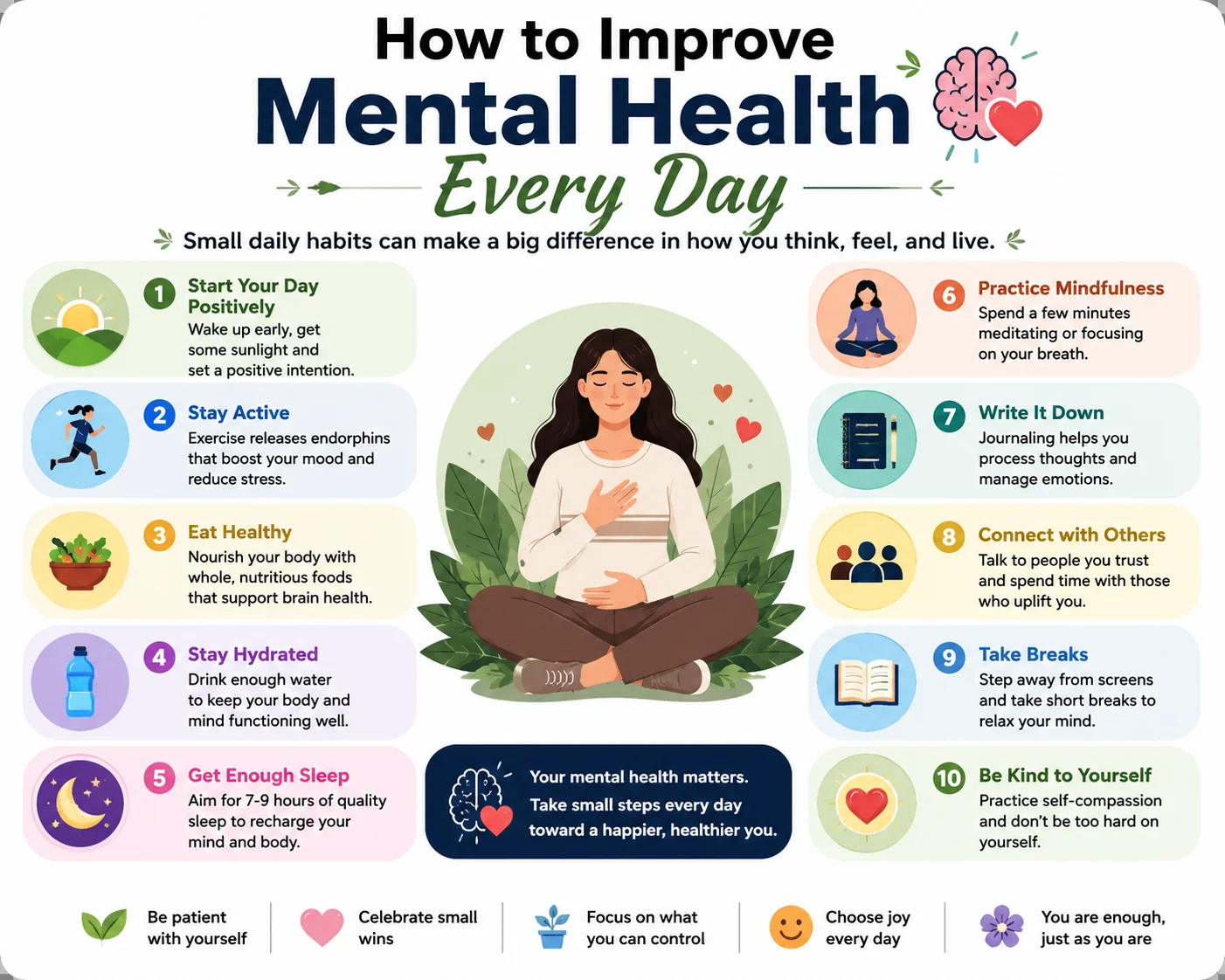
People often think of mental health as something to fix only when it breaks. But like physical health, it responds best to small, consistent care rather than occasional emergency effort. The good news is that improving mental health doesn't require a complete life overhaul. It's usually a handful of daily habits, practiced consistently, that make the biggest difference over time.
Here's a practical, doable approach to supporting your mental health, day by day.
1. Protect Your Sleep
Sleep and mental health are deeply connected. Poor sleep worsens mood, focus, and stress tolerance, while good sleep strengthens all three. Aim for a consistent sleep and wake time, even on weekends, and try to wind down without screens for the last 20-30 minutes before bed.
2. Move Your Body, Even a Little
Exercise doesn't need to mean an intense gym session. A 20-minute walk, some stretching, or a short bike ride can meaningfully lift mood by releasing endorphins and reducing stress hormones. Consistency matters more than intensity here.
3. Get Sunlight Early in the Day
Morning light exposure helps regulate your body's internal clock, which in turn supports mood and energy levels throughout the day. Even 10-15 minutes outside shortly after waking can make a noticeable difference.
4. Eat in a Way That Supports Your Brain
What you eat affects how you feel. Steady blood sugar, balanced meals, and staying hydrated all support stable mood and energy. Skipping meals or relying heavily on caffeine and sugar can contribute to irritability and crashes later in the day.
5. Build in Small Moments of Connection
Isolation quietly erodes mental health, while even brief social contact helps buffer against stress. This doesn't have to be a deep conversation. A quick text to a friend, a short chat with a coworker, or a call to family can be enough to remind you that you're not alone.
6. Practice Naming Your Emotions
Simply putting a name to what you're feeling, "I'm anxious," "I'm frustrated," "I'm overwhelmed," can reduce the intensity of that emotion. This is sometimes called "affect labeling," and it works because naming an emotion engages a different part of the brain than simply feeling it.
7. Set Boundaries Around Your Time and Energy
Constantly saying yes to everything is a fast path to burnout. Practicing small, clear boundaries, whether that's logging off work at a set time or declining a commitment you don't have energy for, protects your mental reserves.
8. Limit Passive Scrolling
Passive social media use, scrolling without real engagement, is consistently linked to lower mood and higher comparison-driven anxiety. Try replacing some scrolling time with an activity that actually recharges you: reading, music, a hobby, or simply resting.
9. Give Yourself Small Wins
A sense of accomplishment, even from small tasks, supports motivation and self-esteem. Making your bed, finishing one item on your to-do list, or tidying one corner of a room can create a small but real sense of progress.
10. Make Space for Rest, Not Just Productivity
Rest isn't the reward for finishing everything, it's a requirement for functioning well. Building in intentional downtime, without guilt, helps prevent the slow burnout that comes from constant output.
11. Practice Gratitude in a Realistic Way
Gratitude doesn't mean ignoring hard things. It means occasionally noticing what's going okay alongside what isn't. Even writing down one specific thing you're grateful for each day can shift perspective over time.
12. Know When to Ask for More Support
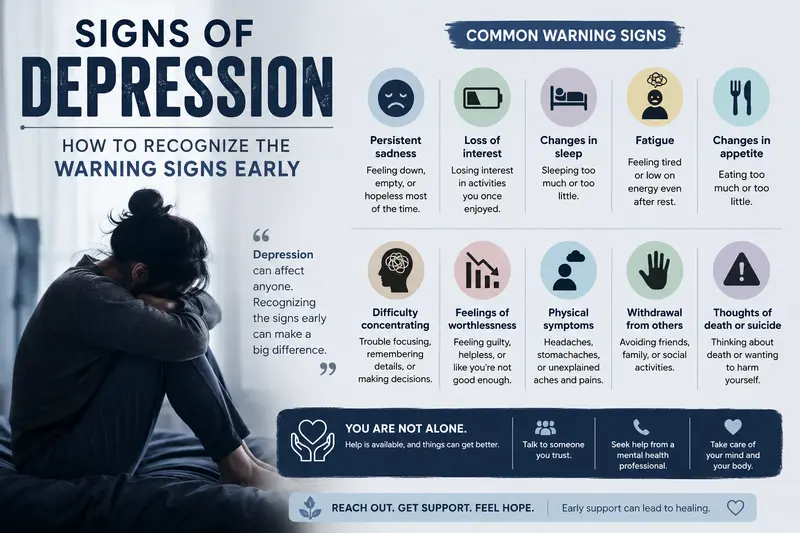
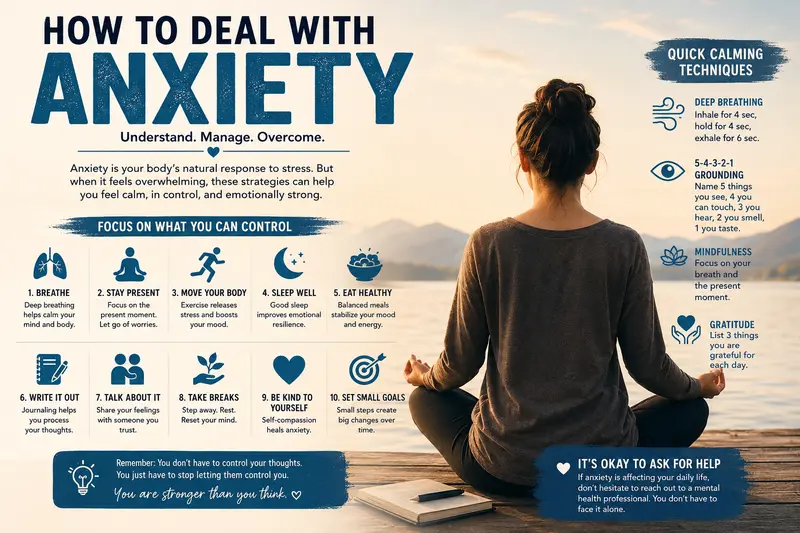
Daily habits help maintain mental health, but they aren't a substitute for professional support when it's needed. If low mood, anxiety, or stress is persistent and affecting daily life, a therapist or doctor can offer support that habits alone can't provide.
Building a Routine That Actually Sticks
The habits above work best when you pick two or three to start, rather than trying to overhaul everything at once. Small, sustainable changes, repeated daily, tend to outperform big changes that are hard to maintain. Mental health isn't built in a single good day. It's built in the ordinary, repeated choices that add up over weeks and months.
Frequently Asked Questions
What is the single most important daily habit for mental health? There isn't one habit that works for everyone, but sleep is often the foundation. Poor sleep tends to worsen mood, focus, and stress tolerance, which makes every other habit harder to sustain.
How long does it take to notice a difference from these habits? Some effects, like a walk lifting your mood, can be felt the same day. Others, like better sleep consistency or stronger social connections, tend to show more noticeable benefits after a few consistent weeks.
Can small daily habits really replace therapy or medication? No. Daily habits support overall mental wellness, but they aren't a replacement for professional treatment when someone is dealing with clinical depression, anxiety, or another mental health condition. Think of habits as a support system that works alongside, not instead of, professional care when it's needed.
What if I don't have much time in my day? Start small. A five-minute walk, one text to a friend, or two minutes of naming how you feel all count. Consistency in small amounts tends to matter more than doing one big thing occasionally.
Is it normal to have off days even with good habits? Yes. Habits improve your overall baseline and resilience, but they don't eliminate hard days entirely. The goal is steadier footing over time, not a permanently perfect mood.
How do I stay consistent with these habits long-term? Pick one or two habits at a time rather than trying to adopt all of them at once. Attaching a new habit to something you already do daily, like stretching right after brushing your teeth, tends to make it stick more easily.
This article is for informational purposes and isn't a substitute for professional mental health care. If you're struggling with your mental health, reaching out to a doctor or therapist is a good next step, and I'm happy to help you think through resources if that would be useful.




















Comments 0
Leave a Comment
💬
No comments yet. Be the first to share your thoughts!