Everest Base Camp Trek
✈ Travel Moderate to challenging

Everest Base Camp Trek

Ramesh Sapkota Ramesh Sapkota
· July 6, 2026 · ⏱ 3 min read · 👁 136 views
📍
Location
Khumbu (Everest Region), Sagarmatha National Park, Nepal
Duration
12–14 days
🥾
Type
Teahouse trek (lodge-to-lodge)
⛰️
Max Altitude
5,545 m / 18,192 ft
🎯
Difficulty
Moderate to challenging
🗓️
Best Season
March–May (spring) and late September–November (autumn)

The Everest Base Camp Trek takes you on foot through Nepal's Khumbu Valley to the foot of the world's highest mountain, at 5,364 meters (17,598 feet). Over roughly two weeks, the trail climbs through Sherpa villages, past centuries-old monasteries, and across glacial moraine to the base camp where Everest expeditions begin. It's demanding, cold at times, and unforgettable — widely considered one of the greatest treks on Earth.

Overview

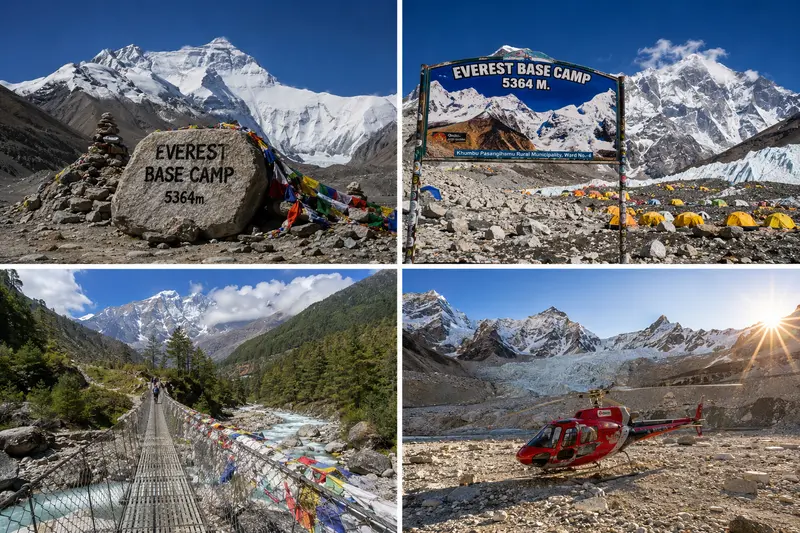
There's a reason the Everest Base Camp Trek sits at the top of so many bucket lists. It isn't just about standing at the base of the tallest mountain in the world — although that moment, when you finally reach the prayer-flag-draped boulder at 5,364 meters, does something to you that photos can't capture. It's the whole journey: the slow climb through a landscape that changes from pine forest to alpine desert, the yak trains jangling past on stone staircases, the smell of juniper smoke drifting from teahouse kitchens, and the Sherpa communities who have called this valley home for centuries.

Most trekkers begin with one of the world's most infamous flights — the short, dramatic hop from Kathmandu (or Ramechhap in busy seasons) to Lukla, a mountain airstrip perched at 2,860 meters. From there, the trail winds north along the Dudh Koshi River, crossing swaying suspension bridges strung with prayer flags, before climbing steeply to Namche Bazaar, the bustling Sherpa capital of the Khumbu. Namche is where most people get their first clear look at Everest itself, and where the acclimatization process begins in earnest.

And acclimatization is the heart of this trek. The route is not technically difficult — there's no climbing, no ropes, no glacier travel — but the altitude is serious. Everything above Namche happens in thin air, and the itinerary is deliberately paced with rest days built in at Namche (3,440m) and Dingboche (4,410m) to let your body adjust. Rushing it is the single most common mistake people make, and it's why altitude sickness sends a number of trekkers home every season.

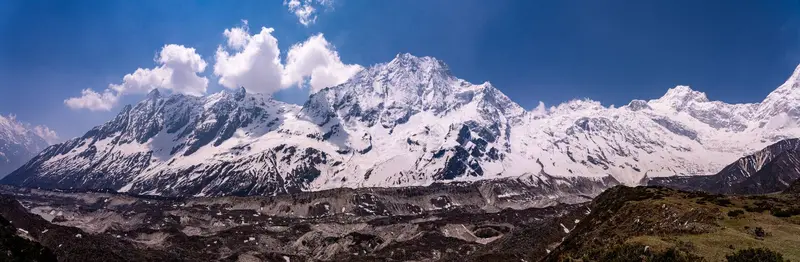
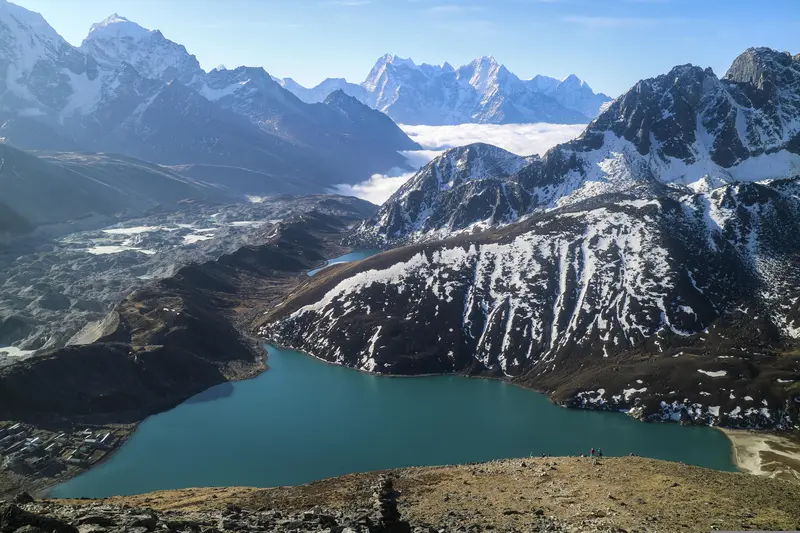
Beyond Namche, the trail passes Tengboche Monastery, the spiritual center of the Khumbu, with its jaw-dropping backdrop of Ama Dablam — arguably the most beautiful mountain on the entire route. The landscape grows starker as you climb through Dingboche and Lobuche, and by the time you reach Gorak Shep, the last settlement at 5,164 meters, you're walking on the rubble of the Khumbu Glacier itself.

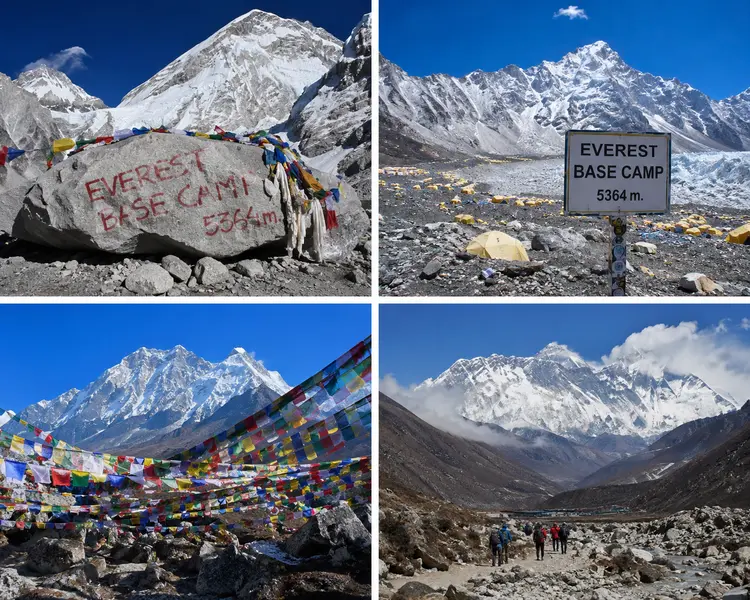
Base Camp is usually reached on day eight or nine. In spring, it's a sprawling tent city buzzing with expedition teams preparing for the summit; the rest of the year, it's a quieter, wilder place marked by a famous boulder and a sea of prayer flags. Interestingly, you can't actually see Everest's summit from Base Camp — for that, most trekkers climb Kala Patthar (5,545m) at dawn the next morning, where the sunrise view of Everest, Nuptse, and the Khumbu Icefall is the true visual payoff of the trip.

The trek is hard work, and it's honest to say so. Days are long (5–8 hours of walking), nights above 4,000 meters are freezing, teahouse rooms are unheated, showers become a luxury, and the food gets simpler and pricier the higher you go. But none of it requires mountaineering skill — just fitness, patience, and respect for the altitude. Thousands of ordinary people in reasonable shape complete it every year, from teenagers to trekkers in their seventies.

What stays with most people isn't just the mountains. It's the rhythm of trail life — waking to frost on the window, warming up over ginger tea, walking through the mani-stone-lined paths as bells echo across the valley — and the quiet realization, somewhere around Tengboche, that you're walking through one of the most extraordinary landscapes and cultures on the planet
Trip Highlights

  • Everest Base Camp (5,364m)
  • Kala Patthar sunrise (5,545m)
  • Namche Bazaar
  • Tengboche Monastery
  • The Hillary Suspension Bridge
  • Thukla Pass memorials
  • Sherpa culture
  • Sagarmatha National Park

🌤️ Weather & Best Time to Visit

Best time to go: March–May (spring) and late September–November (autumn)

Day-by-Day Itinerary

Day1

Fly to Lukla (2,860m), trek to Phakding (2,610m)

Lukla,Nepal

The morning flight to Lukla is an experience in itself — 30–35 minutes of Himalayan views ending on one of the world's shortest runways. The first day's walk is gentle and mostly downhill, following the Dudh Koshi River to the riverside village of Phakding. It's a deliberately easy start.

⛰ Altitude: 2610m 🚶 Distance: 3–4 hours
Day2

Phakding to Namche Bazaar

Namche Bazaar

The first real test. After crossing several suspension bridges (including the famous high Hillary Bridge), the trail climbs a relentless 600+ meter hill to Namche. On a clear day, you'll catch your first glimpse of Everest partway up. Namche is a lively amphitheater-shaped town with bakeries, gear shops, and even ATMs.

⛰ Altitude: 3440m 🚶 Distance: 6-7 hours
Day3

Acclimatization day in Namche

Namche Bazaar

Rest doesn't mean sitting still. The golden rule is "climb high, sleep low," so most trekkers hike up to the Everest View Hotel (3,880m) or Khumjung village for panoramic views of Everest, Lhotse, and Ama Dablam, then return to Namche to sleep.

⛰ Altitude: 3880m 🚶 Distance: 2–4 hours of light hiking
Day4

Namche to Tengboche

Tengboche

A beautiful day of trail contouring high above the river, then dropping to cross it before a stiff two-hour climb to Tengboche. The reward is the Khumbu's most important monastery set against Ama Dablam. Try to catch the afternoon prayer ceremony if the monks are in session.

⛰ Altitude: 3860m 🚶 Distance: 5-6 hours
Day5

Tengboche to Dingboche

Dingboche

The tree line falls away and the landscape turns alpine. You'll pass through Pangboche, home to the region's oldest monastery, before arriving in the wide, windswept Imja Valley and the village of Dingboche.

⛰ Altitude: 4410m 🚶 Distance: 5-6 hours
Day6

Acclimatization day in Dingboche

Dingboche

The second crucial rest day. Most people hike partway up Nangkartshang Peak (you can go as high as ~5,100m) for enormous views of Makalu, Lhotse, and Island Peak, then descend to sleep at 4,410m.

⛰ Altitude: 4410m 🚶 Distance: 3–5 hours of light hiking
Day7

Dingboche to Lobuche

Lobuche

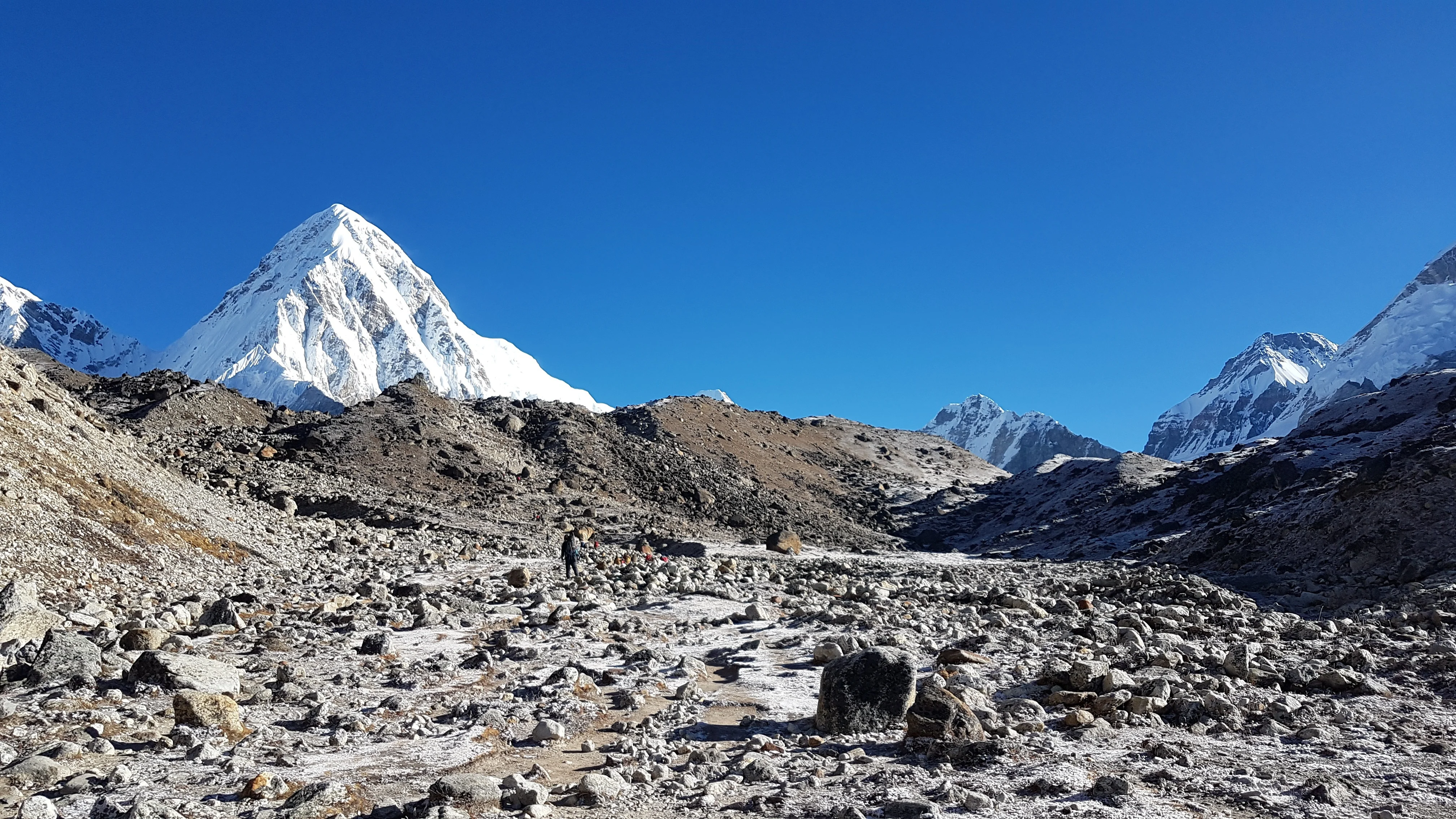
A shorter but tougher day as the air thins noticeably. The trail climbs past the sobering Thukla Pass memorials — a hillside of stone monuments to climbers and Sherpas who died on Everest — before leveling out along the glacier's edge to Lobuche.

⛰ Altitude: 4940m 🚶 Distance: 5–6 hours
Day8

Lobuche to Gorak Shep (5,164m), then Everest Base Camp (5,364m) and back

Everest Base Camp

The big one. A rocky morning walk brings you to Gorak Shep, the last outpost. After lunch, you follow the moraine of the Khumbu Glacier for 2–3 hours to Base Camp itself. Touch the boulder, take the photos, soak it in — then return to Gorak Shep to sleep. It's a long, emotional, exhausting day.

⛰ Altitude: 5364m 🚶 Distance: 7-8 hours
Day9

Kala Patthar sunrise (5,545m), then descend to Pheriche (4,371m)

Pheriche

A pre-dawn start in serious cold for the steep climb up Kala Patthar — the highest point of the trek and the only place you'll see Everest's summit properly, glowing gold at sunrise. Afterward, gravity becomes your friend as you descend all the way to Pheriche.

⛰ Altitude: 4371m 🚶 Distance: 7-8 hours
Day10

Pheriche to Namche Bazaar

A long descent back through Pangboche and Tengboche. Breathing feels luxuriously easy, appetites return, and the first bakery in Namche tastes like a five-star meal.

⛰ Altitude: 3340m 🚶 Distance: 6-7 hours
Day11

Namche to Lukla

Lukla

The final walking day retraces the river valley and finishes with a last cruel uphill into Lukla. Most groups celebrate with a well-earned dinner that night.

⛰ Altitude: 2860m 🚶 Distance: 6-7 hours
Day12

Fly back to Kathmandu

Kathmandu

Weather permitting, an early flight returns you to Kathmandu. Smart planners keep at least one buffer day here — Lukla flights are famously weather-dependent and delays are routine.

🏨 Where to Stay in Khumbu (Everest Region), Sagarmatha National Park

Browse all hotels →

🧭 Travel Essentials

🛂 Visa & Entry Information

Getting there: Fly into Kathmandu (Tribhuvan International Airport). Most nationalities, including US citizens, can get a Nepal visa on arrival — roughly $30 for 15 days, $50 for 30 days. From Kathmandu, the Lukla flight takes about 35 minutes; in peak seasons (spring and autumn), flights often depart from Ramechhap instead, about a 4–5 hour drive from the capital. Budget around $360–480 round trip for the flight.

Permits: Two permits are required — the Sagarmatha National Park Entry Permit (about NPR 3,000 / ~$30) and the Khumbu Pasang Lhamu Rural Municipality Permit (about NPR 2,000 / ~$20). The park permit is available in Kathmandu or at Monjo; the local permit is issued in Lukla or Monjo. The old TIMS card has largely been replaced by the local permit for the standard EBC route, though rules shift periodically — verify current requirements shortly before your trip.

Guides and porters: Nepal has tightened rules on independent trekking in recent years, and regulations in the Everest region have gone back and forth — check the current status before planning a solo trek. Regardless of the rules, most first-timers hire a licensed guide ($25–40/day) and a porter ($25–35/day, carrying up to ~20 kg). A good guide handles logistics, monitors you for altitude symptoms, and can organize an evacuation if things go wrong.

Altitude sickness: This is the trek's real danger. Acute Mountain Sickness (AMS) can affect anyone regardless of fitness. Ascend slowly, take both acclimatization days, drink 3–4 liters of water daily, avoid alcohol on the way up, and never ignore worsening symptoms — headache, nausea, dizziness, or unusual fatigue. Descent is the cure. Many trekkers carry Diamox (acetazolamide) after consulting their doctor.

Insurance: Non-negotiable. Get travel insurance that explicitly covers trekking up to 6,000 meters and helicopter evacuation. A rescue flight from the upper Khumbu can cost several thousand dollars out of pocket without it.

Accommodation and food: You'll sleep in teahouses — simple lodges with twin rooms, shared bathrooms, and a wood-or-dung-fired stove in the dining room. Rooms are cheap (a few dollars to ~$10, rising with altitude) with the expectation that you eat where you sleep. The staple meal is dal bhat (lentils, rice, and vegetables) with unlimited refills; menus also include noodles, fried rice, pasta, momos, and pancakes. Expect food prices to roughly double between Lukla and Gorak Shep.

Money: There are ATMs in Namche, but don't count on them working. Carry enough Nepalese rupees in cash from Kathmandu for the entire trek — budget $25–40 per day on the trail for food, water, charging, Wi-Fi, and hot showers.

Connectivity: NCELL and NTC SIM cards work patchily up the valley; Everest Link Wi-Fi cards are sold in most teahouses. Charging your devices costs $2–5 per device at altitude, so a power bank (or two) is worth its weight.

Water: Skip bottled water — it gets expensive ($4+ per liter high up) and creates plastic waste. Bring purification tablets, a filter, or a UV pen and refill from teahouse taps.

Packing essentials: Broken-in hiking boots, layered clothing (base layers, fleece, insulated jacket, waterproof shell), a warm hat and gloves, sunglasses (category 3–4), high-SPF sunscreen, a headlamp, and a four-season sleeping bag rated to at least -10°C (teahouse blankets alone won't cut it up high). Almost everything can be bought or rented cheaply in Kathmandu or Namche.

Training: You don't need to be an athlete, but you should be comfortable hiking 5–7 hours a day on consecutive days. In the months before the trek, prioritize cardio (hiking, stair climbing, running) and long walks with a loaded daypack.

Flight delays: Lukla's weather cancels flights regularly. Build 1–2 buffer days into your itinerary before your international departure. In a pinch, shared helicopters fly when planes can't — at a price.

Share this travel guide

Ramesh Sapkota

Written by

Ramesh Sapkota

Comments

✏️ Drop your thoughts

No comments yet. Be the first to share your travel experience!

Related Articles

People Also Read

Popular in Travel

Latest in Travel

Editor’s Choice

Continue Reading

Gallery photo