

What Is Anxiety?
Anxiety is your body's natural response to situations that feel uncertain, challenging, or potentially dangerous. It activates your "fight, flight, or freeze" response, preparing you to react quickly.
Feeling nervous before an important interview, exam, presentation, or life event is completely normal. However, anxiety may become a mental health concern when it:
- Happens frequently
- Feels overwhelming
- Is difficult to control
- Persists for months
- Interferes with work, school, relationships, or daily activities
Remember: experiencing anxiety does not mean you are weak or failing. It is a common health condition, and effective treatments are available.
Is Anxiety Normal?
Yes. Anxiety is a normal human emotion.
Healthy anxiety can:
- Keep you alert
- Help you prepare
- Improve focus
- Protect you from danger
It becomes problematic when it is out of proportion to the situation or continues long after the stressful event has passed.
Common Signs and Symptoms
Anxiety affects both the mind and body.
Emotional Symptoms
- Constant worry
- Feeling overwhelmed
- Irritability
- Fear of losing control
- Difficulty relaxing
- Feeling "on edge"
Physical Symptoms
- Rapid heartbeat
- Sweating
- Shaking
- Muscle tension
- Shortness of breath
- Dizziness
- Stomach discomfort
- Nausea
- Headaches
- Fatigue
Cognitive Symptoms
- Racing thoughts
- Difficulty concentrating
- Forgetfulness
- Constant "what if" thinking
- Trouble making decisions
Behavioral Symptoms
- Avoiding certain situations
- Seeking excessive reassurance
- Trouble sleeping
- Reduced productivity
- Social withdrawal
Types of Anxiety Disorders
Several conditions involve anxiety as a primary feature, including:
- Generalized Anxiety Disorder (GAD)
- Panic Disorder
- Social Anxiety Disorder
- Specific Phobias
- Separation Anxiety Disorder
- Agoraphobia
A qualified healthcare professional can determine whether someone meets the criteria for one of these disorders.
What Causes Anxiety?
There is rarely a single cause. Anxiety often develops through a combination of factors.
Biological Factors
- Family history
- Brain chemistry
- Hormonal changes
Psychological Factors
- Past traumatic experiences
- Chronic stress
- Perfectionism
- Negative thinking patterns
Lifestyle Factors
- Poor sleep
- Excess caffeine
- Alcohol or substance use
- Lack of physical activity
- Poor nutrition
Environmental Factors
- Financial stress
- Relationship difficulties
- Academic pressure
- Workplace stress
- Major life changes
Risk Factors
Some people may be more likely to experience anxiety due to:
- Family history of anxiety
- Childhood adversity
- Long-term stress
- Chronic illness
- Other mental health conditions
- Certain personality traits, such as being highly sensitive or perfectionistic
How Anxiety Affects Daily Life
Without support, anxiety can affect many areas of life:
Work
- Difficulty concentrating
- Missed deadlines
- Reduced productivity
Relationships
- Communication challenges
- Increased conflict
- Withdrawal from loved ones
Physical Health
- Sleep problems
- Muscle pain
- Digestive issues
- Frequent headaches
Quality of Life
- Avoiding enjoyable activities
- Feeling isolated
- Reduced confidence
15 Practical Ways to Manage Anxiety
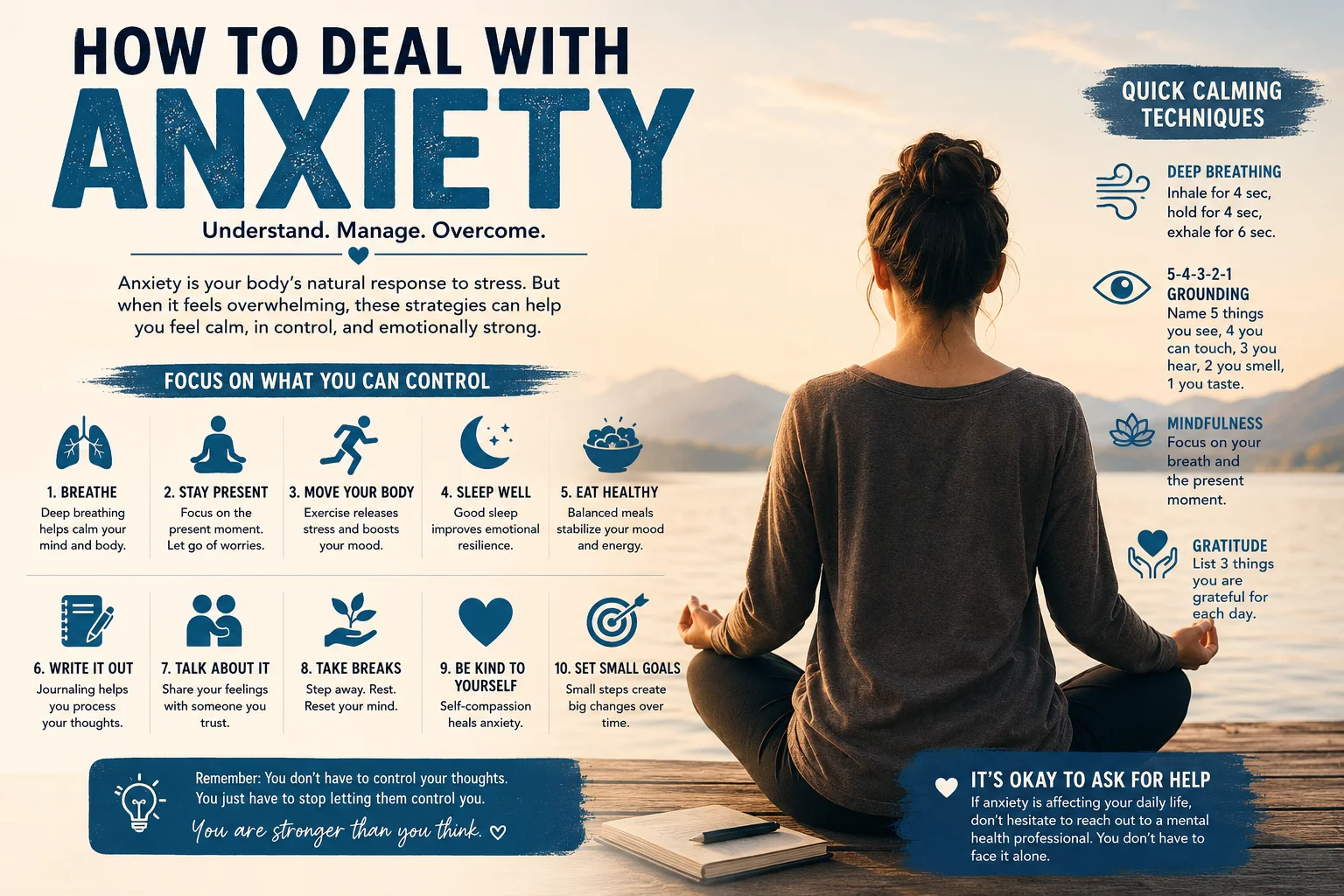
1. Practice Deep Breathing
Slow breathing can help calm the body's stress response.
Try this:
- Inhale for 4 seconds.
- Hold for 4 seconds.
- Exhale for 6 seconds.
- Repeat for several minutes.
2. Ground Yourself in the Present
The 5-4-3-2-1 grounding technique can help during moments of intense anxiety:
- 5 things you can see
- 4 things you can touch
- 3 things you can hear
- 2 things you can smell
- 1 thing you can taste
3. Stay Physically Active
Regular movement supports both physical and mental health. Even a daily walk can improve mood and reduce stress for many people.
4. Prioritize Sleep
Aim for a consistent sleep schedule. Good sleep can make it easier to cope with stress and emotions.
5. Reduce Excess Caffeine
For some people, large amounts of caffeine can worsen anxiety symptoms such as jitteriness or a racing heart.
6. Eat Balanced Meals
Regular meals with fruits, vegetables, whole grains, lean proteins, and healthy fats help support overall health.
7. Limit Alcohol and Recreational Drugs
Although they may seem to provide temporary relief, they can increase anxiety symptoms over time for many people.
8. Challenge Anxious Thoughts
Ask yourself:
- What evidence supports this thought?
- Is there another explanation?
- Am I predicting the worst-case scenario?
- What would I tell a friend in this situation?
9. Practice Mindfulness
Mindfulness encourages paying attention to the present moment without judging it. Even five to ten minutes a day can help many people become more aware of anxious thoughts without automatically reacting to them.
10. Talk to Someone You Trust
Sharing your feelings with a friend, family member, or counselor can reduce feelings of isolation.
11. Set Small, Achievable Goals
Breaking tasks into smaller steps can make overwhelming situations feel more manageable.
12. Spend Time Outdoors
Being in nature can help some people feel calmer and reduce stress.
13. Limit Doomscrolling
Constant exposure to distressing news or social media can increase anxiety. Consider setting time limits for news and social media use.
14. Keep a Journal
Writing down your worries, thoughts, or things you're grateful for may help you notice patterns and process emotions.
15. Consider Professional Support
If anxiety is persistent or significantly affecting your life, speaking with a healthcare professional or mental health provider can help. Evidence-based treatments, including therapy and, in some cases, medication, are effective for many people.
Lifestyle Changes That Support Mental Health
- Exercise regularly.
- Stay connected with supportive people.
- Eat balanced meals.
- Keep a consistent sleep routine.
- Make time for enjoyable activities.
- Learn relaxation techniques.
- Set realistic expectations for yourself.
- Take breaks during busy periods.
When to Seek Professional Help
Consider reaching out to a healthcare professional if:
- Anxiety lasts for several weeks or months.
- It interferes with work, school, or relationships.
- You experience frequent panic attacks.
- You avoid many everyday situations because of fear.
- Self-help strategies are not enough.
If you are in immediate danger or having thoughts of harming yourself
Seek emergency medical care or contact your local emergency services or a crisis hotline immediately. You do not have to face this alone.
Treatment Options
Treatment depends on your individual needs and should be discussed with a qualified healthcare professional.
Common approaches include:
- Cognitive Behavioral Therapy (CBT)
- Acceptance and Commitment Therapy (ACT)
- Mindfulness-based therapies
- Medication (when appropriate and prescribed)
- Lifestyle modifications
- Support groups
Many people benefit from a combination of these approaches.
Supporting Someone with Anxiety
If someone you care about is experiencing anxiety:
- Listen without judgment.
- Avoid minimizing their feelings.
- Ask how you can help.
- Encourage professional support if needed.
- Be patient—recovery often takes time.
- Respect their pace while encouraging healthy coping strategies.
Myths vs. Facts
| Myth | Fact |
|---|---|
| Anxiety is just overthinking. | Anxiety can involve emotional, physical, and cognitive symptoms and may require treatment. |
| People with anxiety should "just relax." | Relaxation can help, but anxiety disorders often require more comprehensive support. |
| Anxiety means someone is weak. | Anxiety can affect anyone, regardless of strength or character. |
| Medication is the only treatment. | Therapy, lifestyle changes, and other evidence-based approaches are also effective for many people. |
| Anxiety never gets better. | Many people improve significantly with the right support and treatment. |
Helpful Resources
- World Health Organization (WHO): https://www.who.int
- National Institute of Mental Health (NIMH): https://www.nimh.nih.gov
- American Psychological Association (APA): https://www.apa.org
- Anxiety & Depression Association of America (ADAA): https://adaa.org
Recommended YouTube Videos
- "Understanding Anxiety" – TED-Ed
- "Generalized Anxiety Disorder Explained" – Psych Hub
- "Breathing Exercise for Anxiety" – Therapy in a Nutshell
- "Grounding Techniques for Anxiety" – Kati Morton






















Comments 0
Leave a Comment
💬
No comments yet. Be the first to share your thoughts!