

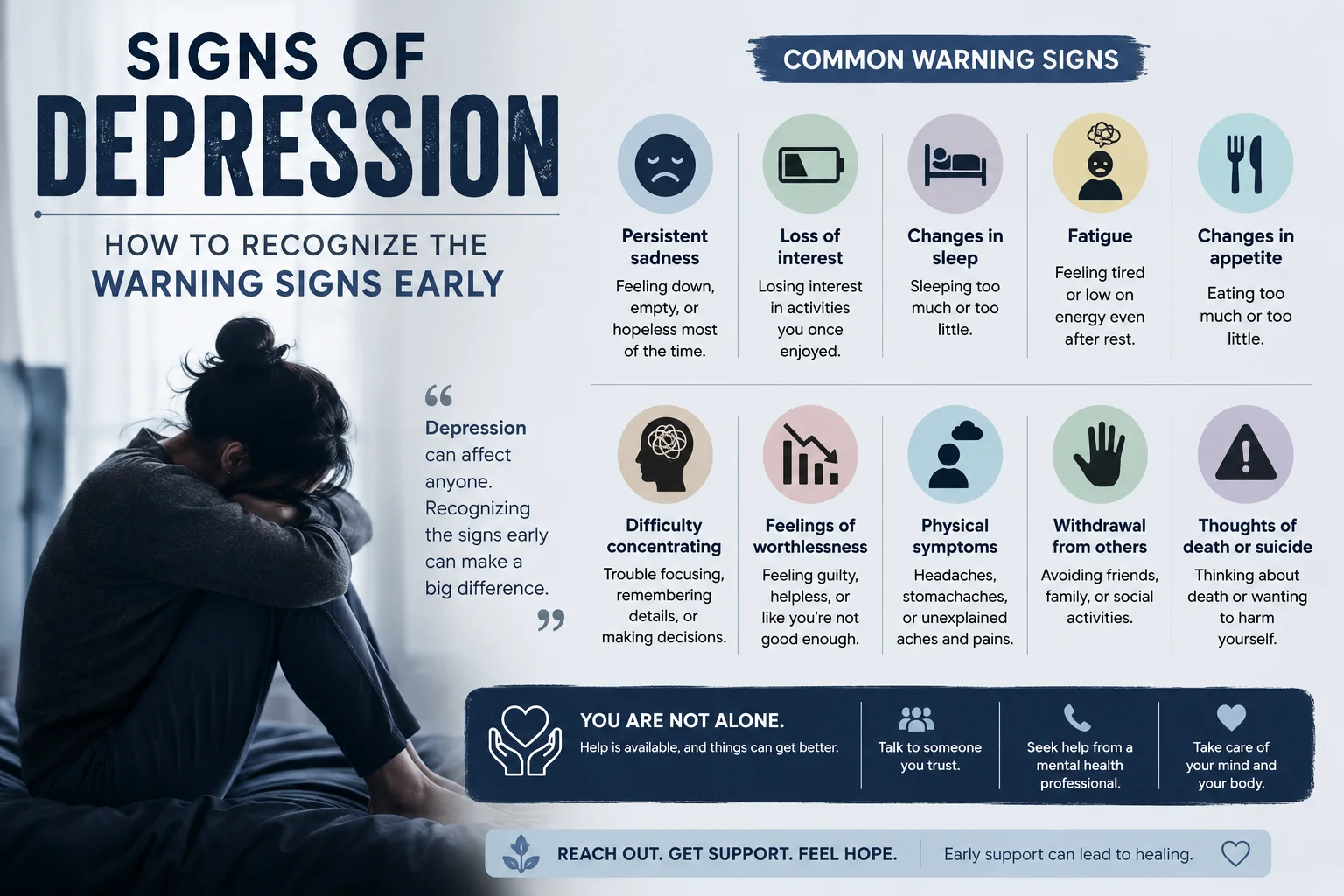
Most people think they'd recognize depression if they saw it. Someone crying, withdrawn, unable to get out of bed. But depression is often quieter than that, and far more common than the stereotype suggests. It can look like a person who still shows up to work every day, still laughs at the right moments, and still seems "fine" on the surface, while underneath, something has gone flat.
Understanding the real signs of depression matters because early recognition changes outcomes. The sooner someone notices what's happening, the sooner they can get support that actually helps.
1. A Persistent Low Mood
The most recognized sign is a sad, empty, or hopeless feeling that sticks around for weeks rather than days. This isn't the ordinary dip everyone feels after a bad day. It's a mood that colors everything, that doesn't lift even when good things happen.
2. Loss of Interest or Pleasure
Psychologists call this anhedonia: the fading of interest in activities that used to bring joy. Hobbies feel like chores. Socializing feels exhausting. Even things someone used to look forward to, a favorite show, a weekend hike, time with friends, start to feel pointless or flat.
3. Changes in Sleep
Depression rarely leaves sleep alone. For some, it means insomnia: lying awake at night, waking up too early, or sleeping in fragments. For others, it's the opposite: sleeping far more than usual and still waking up exhausted.
4. Changes in Appetite or Weight
Some people lose interest in food entirely and drop weight without trying. Others turn to food for comfort and gain weight. Either shift, especially when it happens without a clear reason, is worth paying attention to.
5. Fatigue and Low Energy
This isn't ordinary tiredness. It's a heaviness that makes simple tasks, showering, replying to a text, making a meal, feel disproportionately difficult. Many people describe it as moving through the day with the volume turned down.
6. Difficulty Concentrating
Depression can cloud thinking. Decisions that used to be easy start to feel overwhelming. Focus slips during conversations, reading, or work tasks. Some people describe it as thinking through fog.
7. Irritability or Restlessness
Especially in men and younger people, depression often shows up as irritability, anger, or restlessness rather than visible sadness. Small frustrations feel bigger. Patience runs thin. This is one of the most overlooked signs because it doesn't match the common image of depression at all.
8. Feelings of Worthlessness or Guilt
A harsh inner voice is common: constant self-criticism, disproportionate guilt over small mistakes, or a persistent sense of not being good enough. These thoughts often aren't based on anything that actually happened. They're a symptom, not a fact.
9. Physical Symptoms Without a Clear Cause
Headaches, stomach issues, and unexplained aches sometimes accompany depression, even when there's no medical explanation. The mind and body are connected closely enough that emotional pain often shows up physically.
10. Withdrawal From Others
Canceling plans, going quiet in group chats, avoiding calls, pulling away from people who used to be close. This withdrawal can be gradual enough that it's easy to miss until someone's social world has shrunk considerably.
11. Thoughts of Death or Self-Harm
In more serious cases, depression can bring thoughts of death, self-harm, or suicide. These thoughts should always be taken seriously, in yourself or someone else, and are a clear sign that professional support is needed right away.
When to Seek Help
If several of these signs have been present for two weeks or more and are affecting daily life, work, relationships, or basic functioning, it's worth talking to a doctor or mental health professional. Depression is treatable, and reaching out early tends to make recovery easier and faster. A conversation with a primary care doctor is often a good first step if it's unclear where to start.




















Comments 0
Leave a Comment
💬
No comments yet. Be the first to share your thoughts!