

Self-esteem is how you value yourself as a person. Healthy self-esteem means recognizing both your strengths and your imperfections while believing that you deserve respect, kindness, and care.
Unlike confidence, self-esteem is less dependent on achievements or external approval.
Self-Confidence vs. Self-Esteem
| Self-Confidence | Self-Esteem |
|---|---|
| Belief in your abilities | Belief in your worth |
| Often situation-specific | More stable across situations |
| Built through practice and experience | Strengthened through self-acceptance and healthy relationships |
| Can increase as skills improve | Can improve through self-compassion and personal growth |
Signs of Low Self-Confidence
You may notice:
- Frequently doubting yourself
- Fear of making mistakes
- Avoiding new opportunities
- Comparing yourself to others
- Difficulty accepting compliments
- Negative self-talk
- Fear of criticism or rejection
- Trouble making decisions
- Giving up easily after setbacks
Common Causes
Low confidence can develop from many experiences, including:
- Childhood criticism or bullying
- Unrealistic expectations
- Traumatic experiences
- Repeated failures or disappointments
- Social comparison, especially on social media
- Perfectionism
- Unsupportive relationships
- Anxiety or depression
Often, several factors interact rather than a single cause.
How Low Confidence Affects Your Life
Low confidence can influence many areas:
Career
- Hesitating to apply for promotions
- Avoiding leadership roles
- Fear of speaking up
Relationships
- Difficulty setting boundaries
- Seeking constant reassurance
- Accepting unhealthy treatment
Education
- Fear of asking questions
- Avoiding participation
- Underestimating your abilities
Mental Well-Being
- Increased stress
- Anxiety
- Feeling "not good enough"
- Reduced motivation
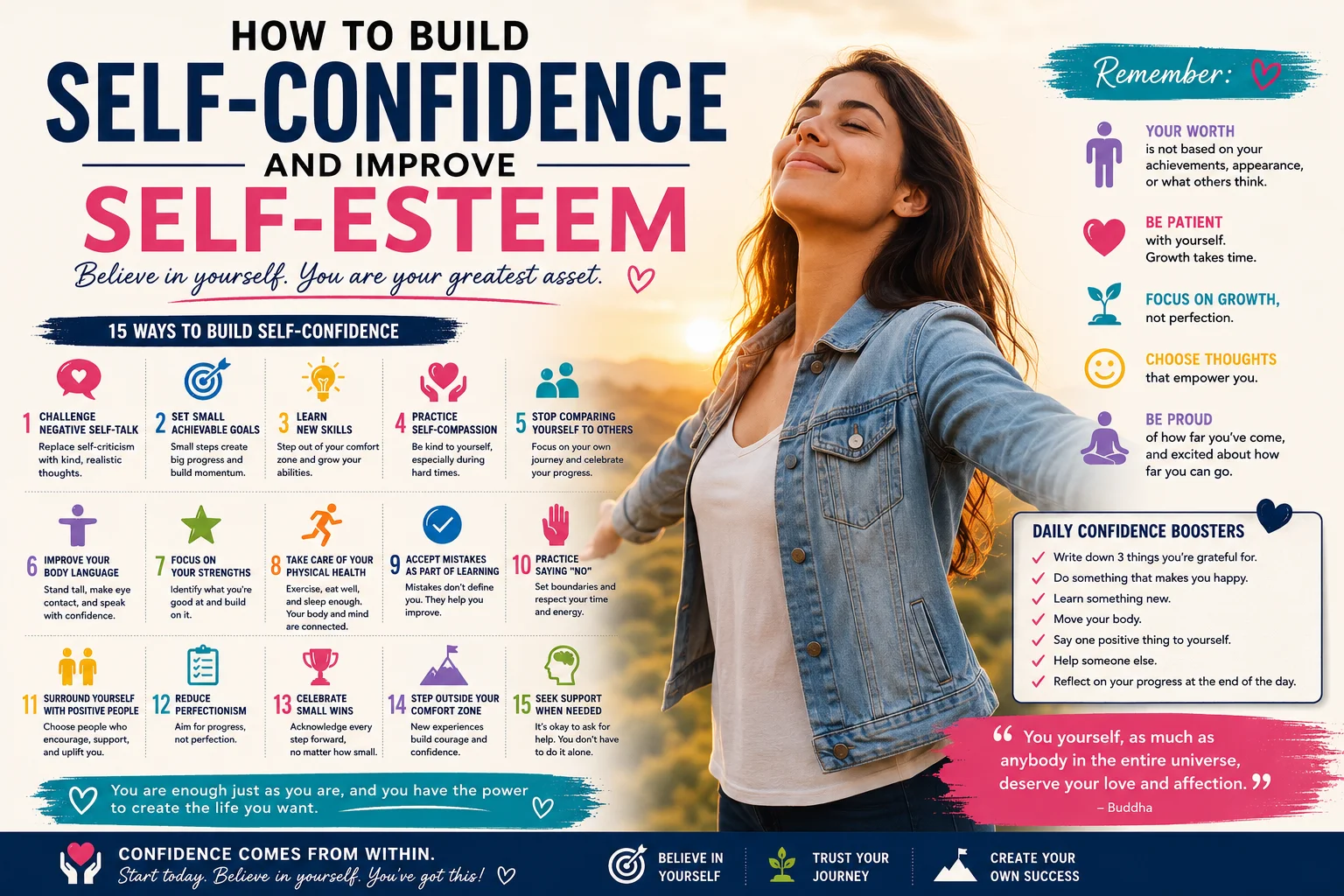
15 Practical Ways to Build Self-Confidence
1. Challenge Negative Self-Talk
Notice critical thoughts such as, "I always fail." Ask yourself:
- Is this thought based on evidence?
- Would I say this to a friend?
- Is there a more balanced way to see the situation?
2. Set Small, Achievable Goals
Confidence grows when you experience progress. Break large goals into smaller, manageable steps and celebrate each milestone.
3. Learn New Skills
Whether it's cooking, coding, public speaking, or painting, learning builds competence—and competence often strengthens confidence.
4. Practice Self-Compassion
Treat yourself with the same understanding you would offer a close friend after a mistake.
5. Stop Comparing Yourself to Others
People often share only the highlights of their lives. Compare your progress with your past self, not someone else's journey.
6. Improve Your Body Language
Standing tall, maintaining comfortable eye contact, and speaking clearly can help you feel more confident over time.
7. Focus on Your Strengths
Write down:
- Skills you have
- Challenges you've overcome
- Compliments you've received
- Personal qualities you're proud of
Review this list regularly.
8. Take Care of Your Physical Health
Regular exercise, balanced nutrition, and adequate sleep support both physical and mental well-being.
9. Accept That Mistakes Are Part of Learning
Everyone makes mistakes. Rather than seeing them as proof of failure, view them as opportunities to learn.
10. Practice Saying "No"
Setting healthy boundaries demonstrates self-respect and helps prevent burnout.
11. Spend Time with Supportive People
Positive relationships can reinforce your strengths and encourage growth.
12. Reduce Perfectionism
Aim for progress rather than perfection. Completing something imperfectly is often more valuable than never starting.
13. Celebrate Small Wins
Keep a journal of daily achievements, no matter how small. Over time, this helps reinforce a sense of capability.
14. Step Outside Your Comfort Zone
Trying something new—even if it feels uncomfortable—can gradually expand your confidence.
15. Seek Professional Support if Needed
If low self-esteem is persistent or linked to anxiety, depression, or past trauma, a mental health professional can help you develop healthier patterns.
Daily Habits That Improve Self-Esteem
- Start the day with a realistic positive intention.
- Move your body regularly.
- Practice gratitude.
- Limit negative social media comparisons.
- Spend time on hobbies you enjoy.
- Learn something new each week.
- Reflect on one thing you did well each day.
- Treat yourself with patience when things don't go as planned.
Mistakes to Avoid
- Believing confidence means never feeling nervous
- Waiting to feel confident before taking action
- Comparing your entire life to someone else's highlights
- Seeking all your validation from others
- Expecting overnight change
Confidence grows through repeated action, not instant transformation.
Supporting Someone with Low Self-Esteem
You can help by:
- Listening without judgment
- Offering sincere encouragement
- Recognizing their efforts, not just outcomes
- Avoiding harsh criticism
- Encouraging realistic goals
- Suggesting professional support if they are struggling significantly
Myths vs. Facts
| Myth | Fact |
|---|---|
| Confident people never feel afraid. | Most confident people still experience fear—they act despite it. |
| Self-esteem depends on success. | Healthy self-esteem comes from self-acceptance, not just achievements. |
| Confidence is something you're born with. | Confidence can be developed through practice and experience. |
| Positive thinking alone builds confidence. | Confidence grows through action, learning, and supportive habits. |
| Asking for help is a sign of weakness. | Seeking support can be an important step toward growth. |
Helpful Resources
- World Health Organization (WHO): https://www.who.int
- American Psychological Association (APA): https://www.apa.org
- National Institute of Mental Health (NIMH): https://www.nimh.nih.gov
- Mental Health Foundation: https://www.mentalhealth.org.uk
Recommended YouTube Videos
- The Six Pillars of Self-Esteem – Nathaniel Branden (summaries and discussions)
- How to Believe in Yourself – TEDx Talks
- Building Confidence Step by Step – Psych2Go
- Self-Compassion Explained – Kristin Neff



















Comments 0
Leave a Comment
💬
No comments yet. Be the first to share your thoughts!