

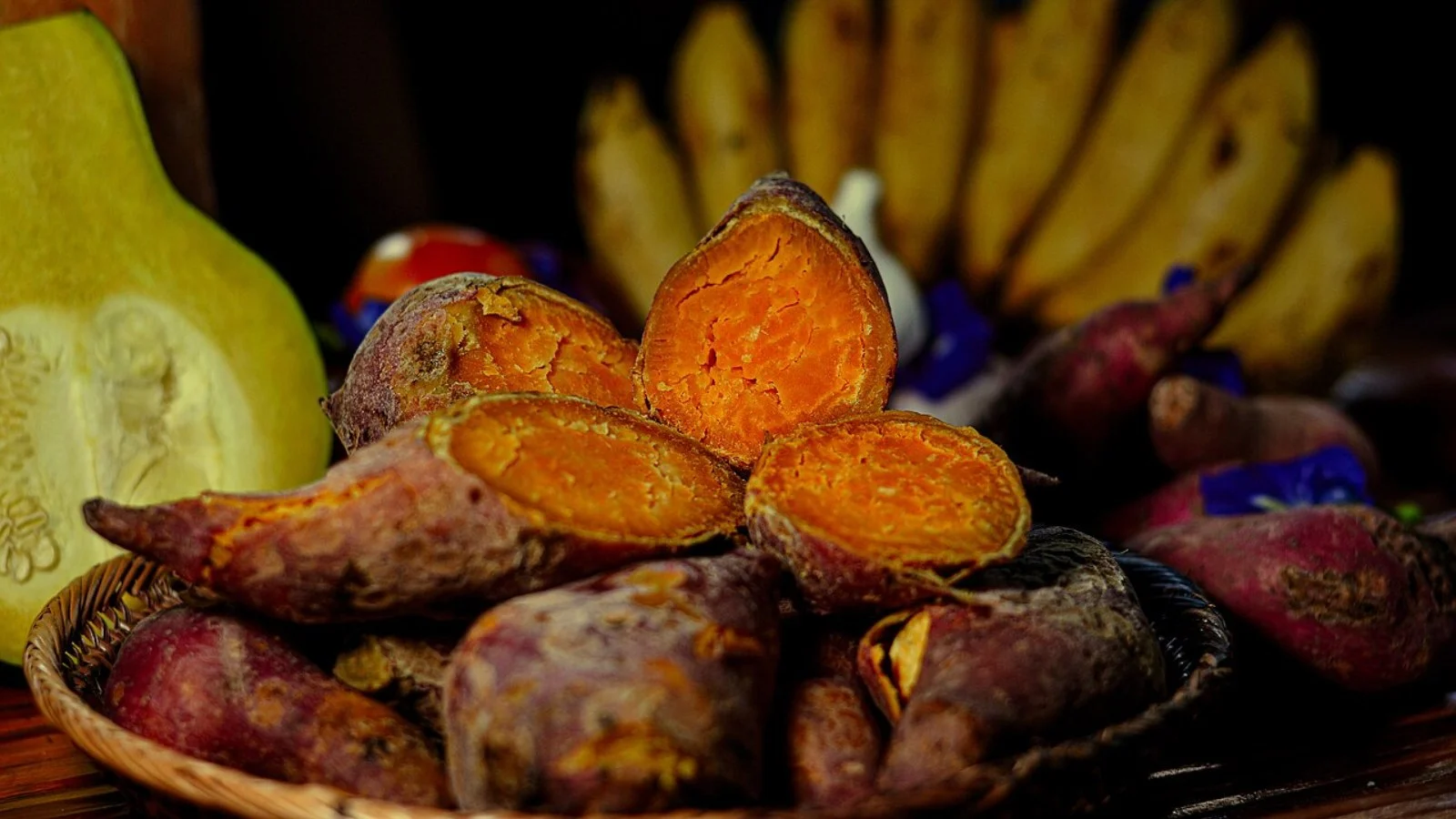
Quick answer: Sweet potatoes are one of the top food sources of beta-carotene, which your body turns into vitamin A, and a good source of vitamin B6, vitamin C, potassium and fibre. Orange varieties have the most beta-carotene; purple ones are rich in anthocyanins. They have a high glycaemic index, close to white potatoes, so moderate portions are best. Boiling them for about 20 minutes with a lid on keeps the most beta-carotene.
Last updated: 28 November 2026
What nutrients are in sweet potatoes?
| Nutrient | Why it matters |
|---|---|
| Beta-carotene (vitamin A) | Supports eyesight, the immune system and skin; sweet potatoes are among the richest sources |
| Fibre | Helps digestion and fullness; much of it is in the skin |
| Potassium | Helps regulate blood pressure and fluid balance |
| Vitamin B6 | Involved in metabolism and brain function |
| Vitamin C | Antioxidant; supports immunity and iron absorption |
| Anthocyanins (purple varieties) | Plant pigments studied for possible health effects |
What are the health benefits of sweet potatoes?
- Excellent vitamin A source: a single serving of orange sweet potato provides a large share of daily vitamin A needs, in the form of beta-carotene.
- Fibre and potassium: especially when you eat the skin, which is edible and nutritious.
- Plant compounds: beta-carotene and anthocyanins are being studied for their role in health and disease prevention, though evidence on specific diseases is still limited.
- A nutritious swap: compared with chips or fries, a baked or boiled sweet potato with its skin adds more vitamins and fibre.
Are sweet potatoes good for blood sugar and diabetes?
Sweet potatoes are healthier than many starchy foods, but they are not a low-sugar food. Their glycaemic index and glycaemic load are high, nearly as high as white potatoes. That is why portion size matters. Research has not found sweet potatoes to be a major cause of weight gain or diabetes, probably because people tend to eat them in smaller amounts than white potatoes. If you have diabetes, pair them with protein, healthy fats and vegetables, and keep portions moderate.
What is the healthiest way to cook sweet potatoes?
| Method | How | Notes |
|---|---|---|
| Boiling | Peel, cut into 1-inch (2.5 cm) cubes, simmer covered 15–20 min | Keeps the most beta-carotene and makes it easier to absorb; about 20 minutes covered retains up to 92% |
| Baking | Prick 4–5 times, bake at 400°F (200°C) for 45–60 min | Easy and tasty; some nutrient loss |
| Microwave | Prick, cook on high 8–10 min, turning halfway | Fastest option |
| Roasted wedges | Toss with olive oil, bake at 375°F (190°C) for 25–35 min | A little oil helps you absorb beta-carotene |
| Frying | Deep-fried chips or fries | Least healthy; adds fat and loses more nutrients |
Tip: cooking with the skin on reduces nutrient loss. Scrub it well first.
What is the difference between sweet potatoes and yams?
They are different plants. Sweet potatoes are roots from the morning glory family, with copper-coloured skin and flesh that can be orange, white, yellow or purple. True yams are tubers from a different plant family, native to Africa and Asia, with rough, bark-like brown skin. Many vegetables sold as "yams" in US supermarkets are actually orange sweet potatoes. Regular potatoes are tubers from the nightshade family, so they are not closely related either.
How do you store sweet potatoes?
Keep them in a cool, dry, dark place, not the fridge. They are more perishable than they look, so use them within about a week of buying.
Easy ways to eat more sweet potatoes
- Bake one whole and top with beans, yoghurt and herbs.
- Add cubes to curries, soups and stews.
- Mash with a little olive oil and a pinch of cinnamon instead of butter and sugar.
- Roast wedges as a side dish.
- In some countries the leaves are eaten too, cooked like spinach.
This article is for general information and is not medical advice. Talk to your doctor or a registered dietitian about your own diet, especially if you have a medical condition or take medication.
Featured image: "File:Sweet potato 165566975381631747" by LensLovinCristy, CC BY-SA 4.0 (cropped), via Wikimedia Commons. Harvard T.H. Chan School of Public Health, The Nutrition Source: Sweet Potatoes


















Comments 0
Leave a Comment
💬
No comments yet. Be the first to share your thoughts!