

Last updated: 25 November 2026
Quick answer: Beetroot's main benefit comes from its natural nitrates, which the body turns into nitric oxide, helping blood vessels relax. Studies link beetroot juice to a small drop in blood pressure and slightly better endurance in exercise. It is also low in calories and a good source of folate and fibre. Red or pink urine afterwards is usually harmless.
What nutrients are in beetroot?
| Nutrient (per 100 g, raw) | Approximate amount |
|---|---|
| Calories | about 43 kcal |
| Carbohydrates | about 10 g (of which sugars about 7 g) |
| Fibre | about 2.8 g |
| Protein | about 1.6 g |
| Folate | about 109 µg (roughly a quarter of daily needs) |
| Potassium | about 325 mg |
| Manganese | about 0.3 mg |
| Dietary nitrate | high, but varies a lot with soil and growing conditions |
Does beetroot lower blood pressure?
Modestly, yes, for many people. Dietary nitrate from beetroot is converted to nitric oxide, which widens blood vessels. Reviews of clinical trials have found that beetroot juice can lower systolic blood pressure by a few points, with the effect usually strongest in people whose blood pressure is already raised. It is a helpful addition to a healthy diet, not a replacement for prescribed blood pressure medicine.
Does beetroot juice improve exercise performance?
This is the best-studied benefit. Many trials suggest nitrate-rich beetroot juice can lower the oxygen cost of exercise and modestly improve endurance and time to exhaustion, especially in recreational athletes. Studies typically give it about 2–3 hours before exercise. Effects in highly trained elite athletes tend to be smaller and less consistent.
What are the other benefits of beetroot?
- Digestive health: its fibre supports regular digestion and feeds healthy gut bacteria.
- Folate: important for cell growth and especially in pregnancy.
- Antioxidant pigments: beetroot's colour comes from betalains, which show antioxidant and anti-inflammatory activity in lab studies. Human evidence is still limited.
- Weight-friendly: low in calories and fat, and filling thanks to its fibre and water.
- Possible brain blood flow: early studies suggest nitrates may improve blood flow to parts of the brain in older adults, but more research is needed.
Raw, cooked or juice: which is best?
| Form | Pros | Cons |
|---|---|---|
| Raw (grated in salads) | Keeps most nitrate and vitamins, plus fibre | Earthy taste some people dislike |
| Boiled or roasted | Sweeter taste, easy to eat, keeps fibre | Boiling loses some nitrate and folate into the water |
| Juice | Concentrated nitrate, used in most studies | Little fibre, more sugar per glass |
| Beetroot powder or shots | Convenient for athletes | Nitrate content varies by brand; costly |
How much beetroot should you eat?
There is no official daily target. Studies on blood pressure and exercise often use about 70–250 ml of beetroot juice or a concentrated "shot" per day. For everyday health, a portion of beetroot a few times a week as part of a varied diet is a sensible approach.
Why does beetroot turn urine red?
Pink or red urine or stools after eating beetroot is called beeturia. It affects a minority of people and is usually harmless. It is more common in people with low iron levels, so if it happens every time, it may be worth mentioning to your doctor. If you see red urine without having eaten beets, get it checked.
Who should be careful with beetroot?
- People prone to kidney stones: beetroot and especially beet greens are high in oxalates.
- People taking blood pressure medicine: large amounts of beet juice may add to the effect; talk to your doctor.
- People with diabetes: juice contains natural sugars without much fibre; whole beetroot is a better choice.
- Anyone with a sensitive stomach: beetroot contains FODMAPs that can cause bloating in some people.
Key takeaways
- Beetroot's nitrates can modestly lower blood pressure and help endurance.
- It is low in calories and rich in folate and fibre.
- Whole beetroot is best for daily eating; juice is what most studies use.
- Red urine after beets is usually harmless.
Health note: This article is for general information only and is not medical advice. Talk to a doctor or registered dietitian before making major changes to your diet, especially if you have kidney problems, take medication or are pregnant.
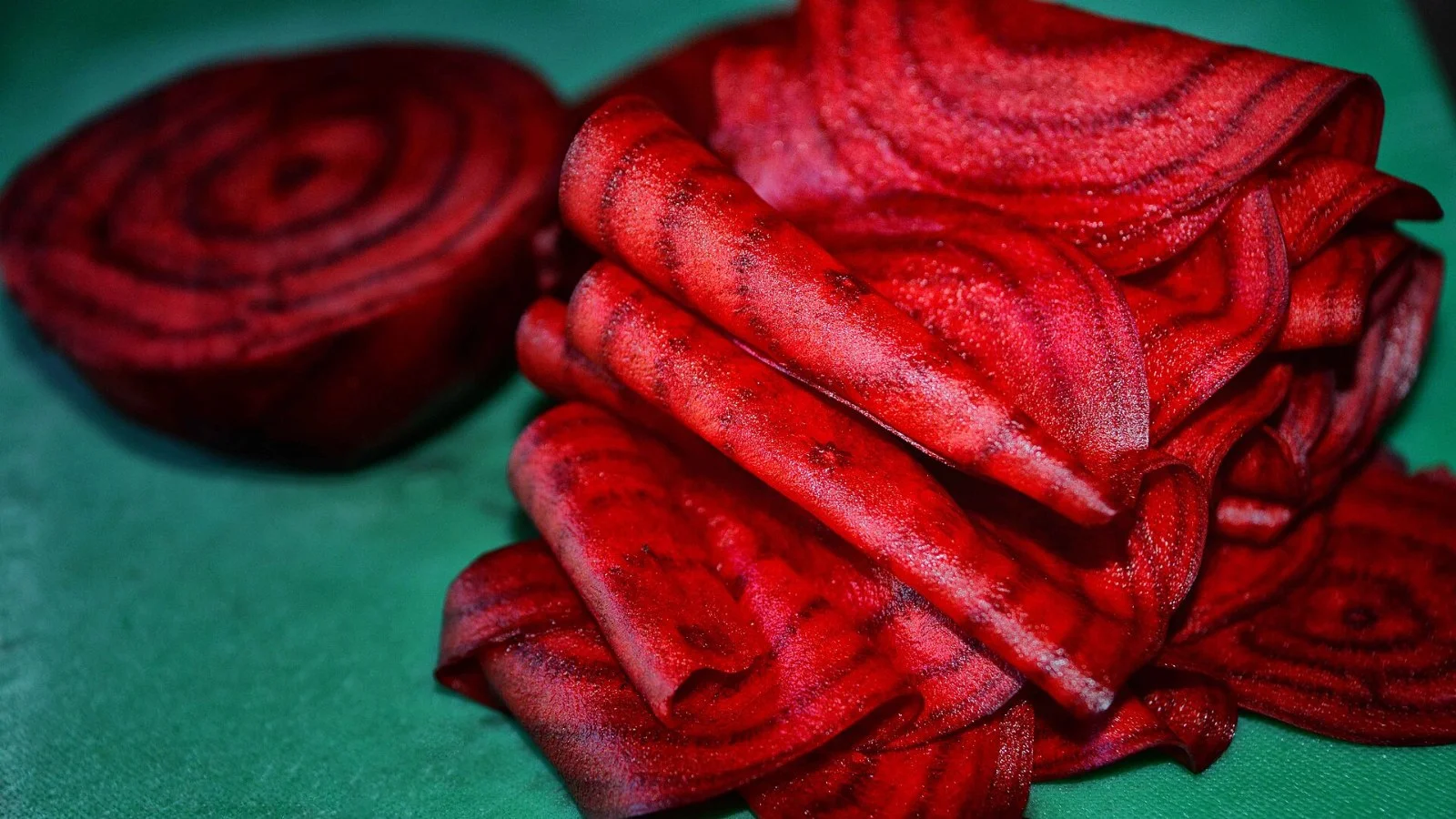
Featured image: "Beetroot Carpaccio (12536390013)" by Rod Waddington from Kergunyah, Australia, CC BY-SA 2.0 (cropped), via Wikimedia Commons. Sources: USDA FoodData Central; published reviews and meta-analyses on dietary nitrate, blood pressure and exercise performance; NHS guidance on kidney stones.



















Comments 0
Leave a Comment
💬
No comments yet. Be the first to share your thoughts!