

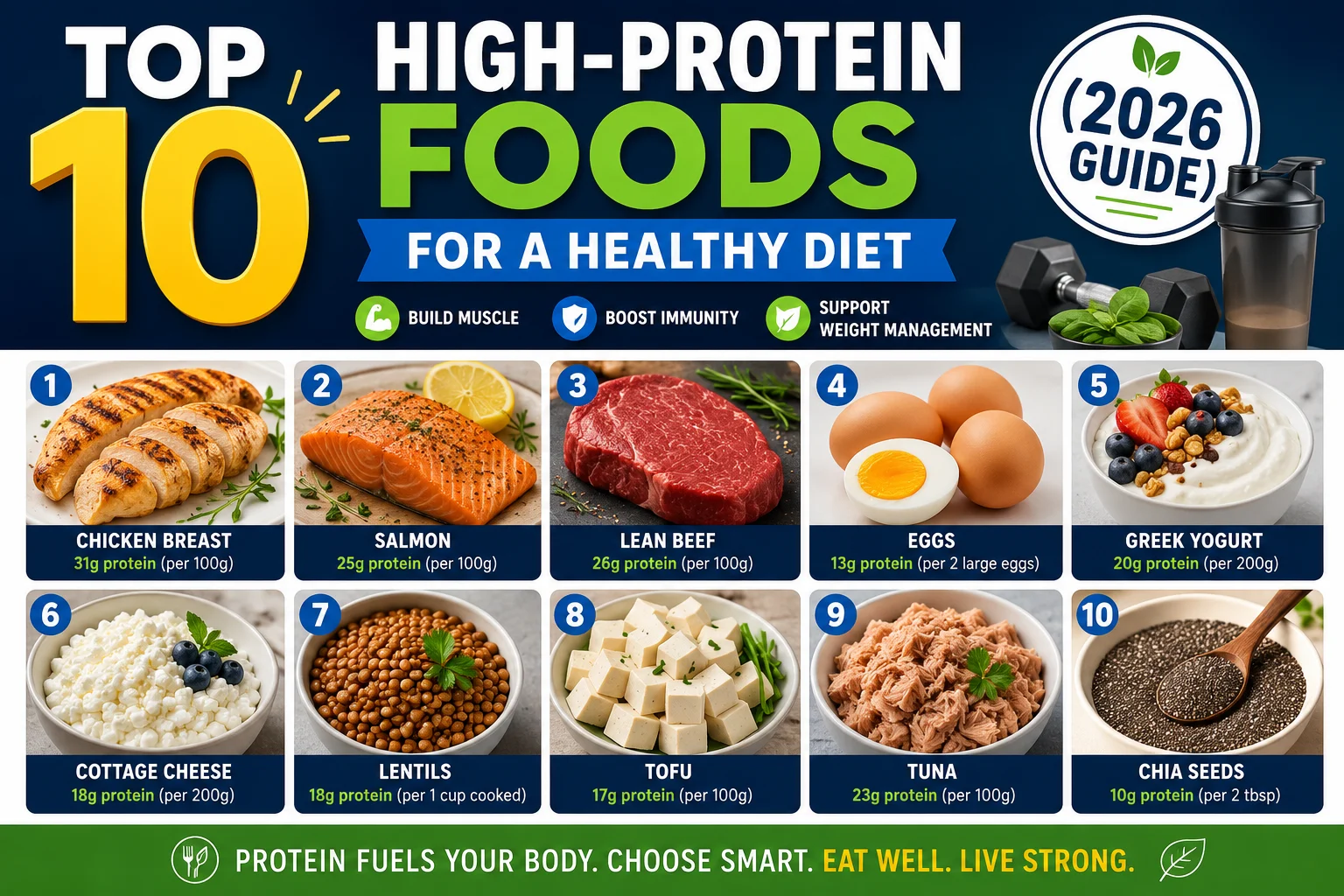
Protein is one of the most important nutrients your body needs. It helps build and repair muscles, supports your immune system, keeps you feeling full, and plays a key role in producing enzymes and hormones.
Whether you're trying to gain muscle, lose weight, or simply eat a balanced diet, adding high-protein foods to your meals is a smart choice.
1. Eggs
Protein: About 6–7g per large egg
Eggs are one of the highest-quality protein sources because they contain all nine essential amino acids. They are also rich in vitamin B12, vitamin D, selenium, and choline.
Benefits
- Supports muscle growth
- Keeps you full longer
- Great for breakfast or snacks
2. Chicken Breast
Protein: About 31g per 100g (cooked)
Chicken breast is a lean source of protein with very little fat, making it popular among athletes and fitness enthusiasts.
Benefits
- Builds lean muscle
- Low in calories
- Rich in niacin and vitamin B6
3. Greek Yogurt
Protein: About 10g per 100g
Greek yogurt contains more protein than regular yogurt and provides probiotics that support gut health.
Benefits
- Supports digestion
- High in calcium
- Ideal as a snack or breakfast
4. Salmon
Protein: About 25g per 100g
Salmon is packed with protein and heart-healthy omega-3 fatty acids.
Benefits
- Supports heart health
- Promotes brain function
- Rich in vitamin D
5. Cottage Cheese
Protein: About 11g per 100g
Cottage cheese is rich in casein protein, which digests slowly and helps keep you satisfied.
Benefits
- Great before bedtime
- High in calcium
- Supports muscle recovery
6. Lentils
Protein: About 9g per 100g (cooked)
Lentils are one of the best plant-based protein sources and are also high in fiber.
Benefits
- Heart-friendly
- Improves digestion
- Budget-friendly
7. Tuna
Protein: About 29g per 100g
Tuna is a lean, high-protein fish that is low in fat and easy to add to salads, sandwiches, and wraps.
Benefits
- High-quality lean protein
- Rich in vitamin B12
- Supports muscle maintenance
8. Tofu
Protein: About 17g per 100g
Tofu is made from soybeans and is an excellent protein choice for vegetarians and vegans.
Benefits
- Plant-based complete protein
- Rich in iron
- Versatile for many recipes
9. Lean Beef
Protein: About 26g per 100g
Lean beef provides complete protein along with iron, zinc, and vitamin B12.
Benefits
- Supports muscle growth
- Helps prevent iron deficiency
- Nutrient-dense
10. Almonds
Protein: About 21g per 100g
Almonds are a healthy snack that provides protein, healthy fats, and vitamin E.
Benefits
- Heart-healthy
- Great for snacking
- Rich in antioxidants
Protein Comparison Table
| Food | Protein (per 100g) | Best For |
|---|---|---|
| Chicken Breast | 31g | Muscle building |
| Tuna | 29g | Lean protein |
| Lean Beef | 26g | Strength and iron |
| Salmon | 25g | Heart health |
| Almonds | 21g | Healthy snacks |
| Tofu | 17g | Plant-based diets |
| Cottage Cheese | 11g | Recovery |
| Greek Yogurt | 10g | Breakfast |
| Lentils (Cooked) | 9g | Vegetarians |
| Egg | 6–7g (per egg) | Everyday nutrition |
Benefits of Eating More Protein
Increasing your protein intake may help:
- Build and maintain muscle
- Support healthy weight management
- Keep you feeling full longer
- Aid recovery after exercise
- Strengthen bones and tissues
- Support immune function
- Help maintain healthy skin, hair, and nails
The best high-protein foods include chicken breast, tuna, lean beef, salmon, almonds, tofu, cottage cheese, Greek yogurt, lentils, and eggs. These foods provide high-quality protein along with essential vitamins and minerals, making them ideal for muscle growth, weight management, and overall health.


















Comments 0
Leave a Comment
💬
No comments yet. Be the first to share your thoughts!