

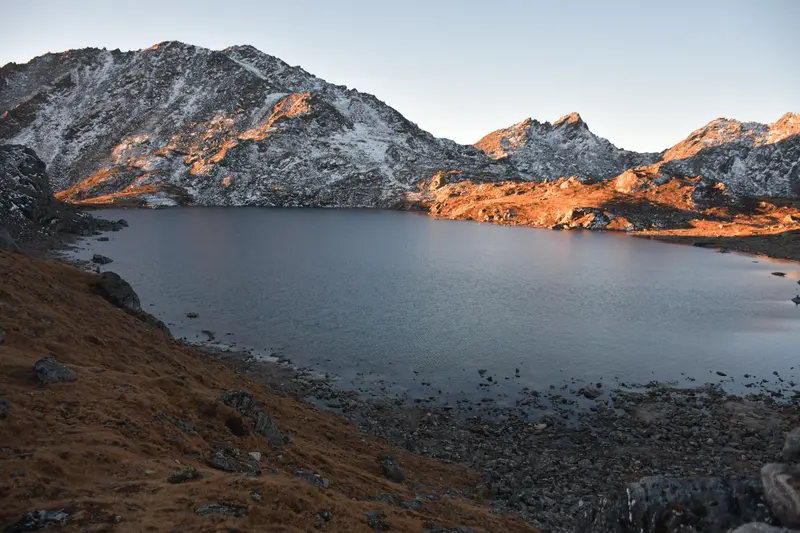
Rara Lake is Nepal's largest lake, sitting at about 2,990 m in the remote Mugu district of far-western Nepal. Its clear water changes from deep blue to turquoise through the day, surrounded by forests of pine, spruce and juniper and snow-capped peaks. The lake lies inside Rara National Park, the country's smallest national park, and sees only a few thousand visitors a year, making it one of Nepal's most peaceful destinations.
Why visit Rara?
- Untouched nature: clean air, quiet trails and no crowds.
- Walk around the lake: a full loop of about 10.8 km takes most of a day.
- Wildlife: look for migratory birds, red pandas and Himalayan black bears in the forests.
- Viewpoints: hike up Murma Top or the Chuchemara ridge for views over the lake and the Himalaya.
Permits and fees
You need a Rara National Park entry permit. In October 2026 the Nepal Tourism Board listed it at NPR 3,000 per person per entry for foreigners, NPR 1,500 for SAARC nationals and NPR 100 for Nepalis, with children under 10 free. Some operators also arrange a TIMS card. A licensed guide is recommended.
How to get there
The quickest way is to fly Kathmandu–Nepalgunj–Talcha and walk 2–3 hours to the lake. Talcha flights depend heavily on the weather, so leave spare days. Adventurous trekkers can instead fly to Jumla and walk for several days through remote villages.
Best time to go
Spring (March–May) brings blooming rhododendrons, and autumn (September–November) has the clearest skies and bluest water. Winter is very cold with snow, and the monsoon brings rain, leeches and frequent flight cancellations.
Tips
- Plan at least one spare day for flight delays on each side.
- Carry snacks, a water filter and a power bank; electricity can be limited.
- Respect local customs in the Thakuri and Buddhist villages of the Karnali region.
Fees and costs are approximate and based on 2026 information; check current prices and flight schedules before you travel.









Comments
✏️ Drop your thoughts
No comments yet. Be the first to share your travel experience!